

Duo brings publications and leadership experience, complementary research backgrounds to journal
Annapolis, MD; November 3, 2026—Jared G. Ali, Ph.D., and Ian Kaplan, Ph.D., have been appointed to serve as the next co-editors-in-chief of the journal Environmental Entomology, published by the Entomological Society of America.

Jared G. Ali, Ph.D.
Ali is an associate professor in the Department of Entomology at Penn State University, and Kaplan is a professor in the Department of Entomology at Purdue University. They will succeed current editors-in-chief Therese Poland, Ph.D., and Melody Keena, Ph.D., research entomologists at the USDA Forest Service who have served in the role since April 2019. The ESA Governing Board approved the selection in October after an open search was conducted in the summer of 2026.
"Dr. Ali and Dr. Kaplan will make our next great team at the helm of Environmental Entomology," says ESA President Melissa W. Siebert, Ph.D., BCE. "Their research backgrounds and publications experience will serve them well in this role, and they have a strong vision for growing the journal, expanding its visibility, and adapting to trends in the scientific landscape. My colleagues and I on the Governing Board are excited for them to step in, and we are deeply grateful to Dr. Poland and Dr. Keena for their eight years of outstanding service to the journal."
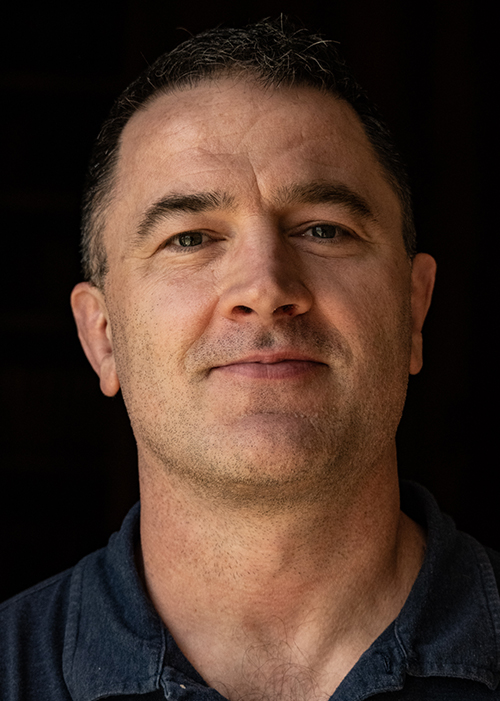
Ian Kaplan, Ph.D.
Since 1972, Environmental Entomology has published reports on the interaction of insects with the biological, chemical, and physical aspects of their environment. Ali and Kaplan will begin their four-year term leading the journal starting January 1, 2027.
Ali and Kaplan bring more than two decades of experience each in research, education, and scientific leadership. Both have served in editorial roles at journals throughout their careers, mentored dozens of students and postdoctoral researchers, and led public-facing science communication efforts. Their areas of research cover much of Environmental Entomology's scope subjects; they share backgrounds in plant-insect and multitrophic interactions, while Ali's research has focused on plant resistance mechanisms and chemical ecology and Kaplan's on pollination ecology and integrated pest management.
"I am honored and excited to serve as co-editor-in-chief of Environmental Entomology," Ali says. "Having contributed to the journal as an author, reviewer, and associate editor, I deeply value its longstanding contributions to our field. I look forward to working with Dr. Kaplan to build on that legacy, broaden the journal's reach, and highlight innovative research."
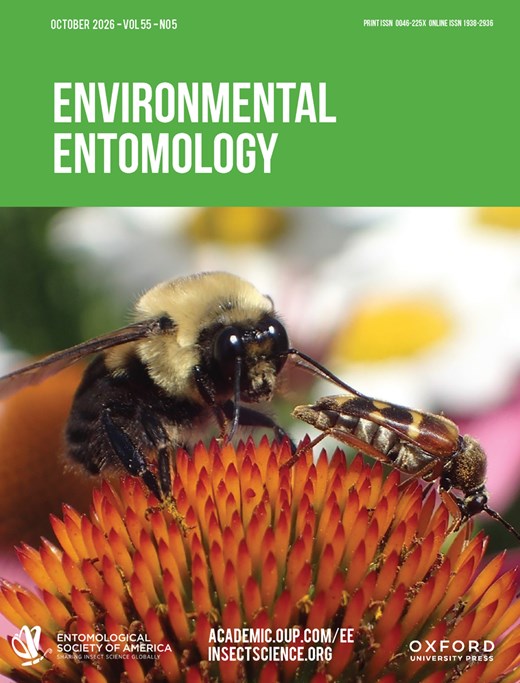
Environmental
Entomology
"My first scientific paper was published in Environmental Entomology, so it's especially exciting to now have the opportunity to help shape its future," says Kaplan. "The journal has a long history of publishing influential research in insect science, and I look forward to working with my co-editor, subject editors, and the broader entomological community to build on that legacy while strengthening the journal's reach and impact."
In addition to his associate professor position, Ali is currently director of the Center for Chemical Ecology and associate chair of the Ecology Graduate Program at Penn State's Huck Institutes of the Life Sciences. He joined the Penn State entomology faculty as an assistant professor in 2016 and was promoted to associate professor in 2022. Previously, he served as an assistant professor of entomology at Michigan State University (2013–2016) and as a postdoctoral fellow in ecology and evolutionary biology at Cornell University (2011–2013). He earned a B.S. in biological sciences (2005) and an M.S. in entomology and applied ecology (2008) at the University of Delaware and a Ph.D. in entomology (2011) at the University of Florida. He has served as an associate editor for Environmental Entomology (2016–2022) in addition to leadership roles at three other scientific journals, and he has authored more than 60 peer-reviewed publications.
Kaplan joined the entomology faculty at Purdue as an assistant professor in 2009 before being promoted to associate professor in 2014 and professor in 2018. He served as a postdoctoral associate in entomology at Cornell University from 2007 to 2009. Kaplan earned a B.S. in biology (2000) at Davidson College, an M.S. in entomology (2003) at Auburn University, and a Ph.D. in entomology (2007) at the University of Maryland. He has served as a subject editor for Environmental Entomology (2009–2014) in addition to leadership roles at three other scientific journals, and he has authored more than 100 peer-reviewed publications.
###
CONTACT: Joe Rominiecki, jrominiecki@entsoc.org, 301-731-4535 x3009
ABOUT: ESA is the largest organization in the world serving the professional and scientific needs of entomologists and people in related disciplines. Founded in 1889, ESA today has nearly 7,000 members affiliated with educational institutions, health agencies, private industry, and government. Headquartered in Annapolis, Maryland, the Society stands ready as a non-partisan scientific and educational resource for all insect-related topics. For more information, visit www.entsoc.org.
Environmental Entomology publishes reports on the interaction of insects with the biological, chemical, and physical aspects of their environment. For more information, visit https://academic.oup.com/ee, or visit insectscience.org to view the full portfolio of ESA journals and publications.